I’m not just talking about academic presentations here, but they certainly fall into this camp. I’m talking about how to structure a research presentation of any kind – presentations where you’re reporting back on how you solved a problem. That’s going to include questions such as “How should we spend our marketing budget this year?” and other business-related problems.
The traditional (wrong) way to structure a research presentation
Here’s how most presentations are structured:
- problem – this is a reminder of whatever the research problem is that this presentation is supposed to tackle. In the jargon I used I call it the ‘why’ of your presentation.
- working – here the presenter talks about what a hero the were; about how hard it was to solve the problem; and the issues they had to overcome. They might talk about things like increasing the data-quality, analysis processes, tools and sometimes even how hard they worked. I call it the ‘how’ section.
- solution – this is pretty obvious isn’t it? I call it the ‘What’… what did the presenter find? Importantly this could be both substantive or methodological – in other words the ‘What’ could be either a new fact or a new process.
Why am I interested? What’s annoyed me?
I get easily annoyed, I admit it. When I see bad presentations it grinds my gears – and a badly structured presentation about solving a problem is one of the most common things I sit through, hence the most commonly irritating type of wrong presentation 😉
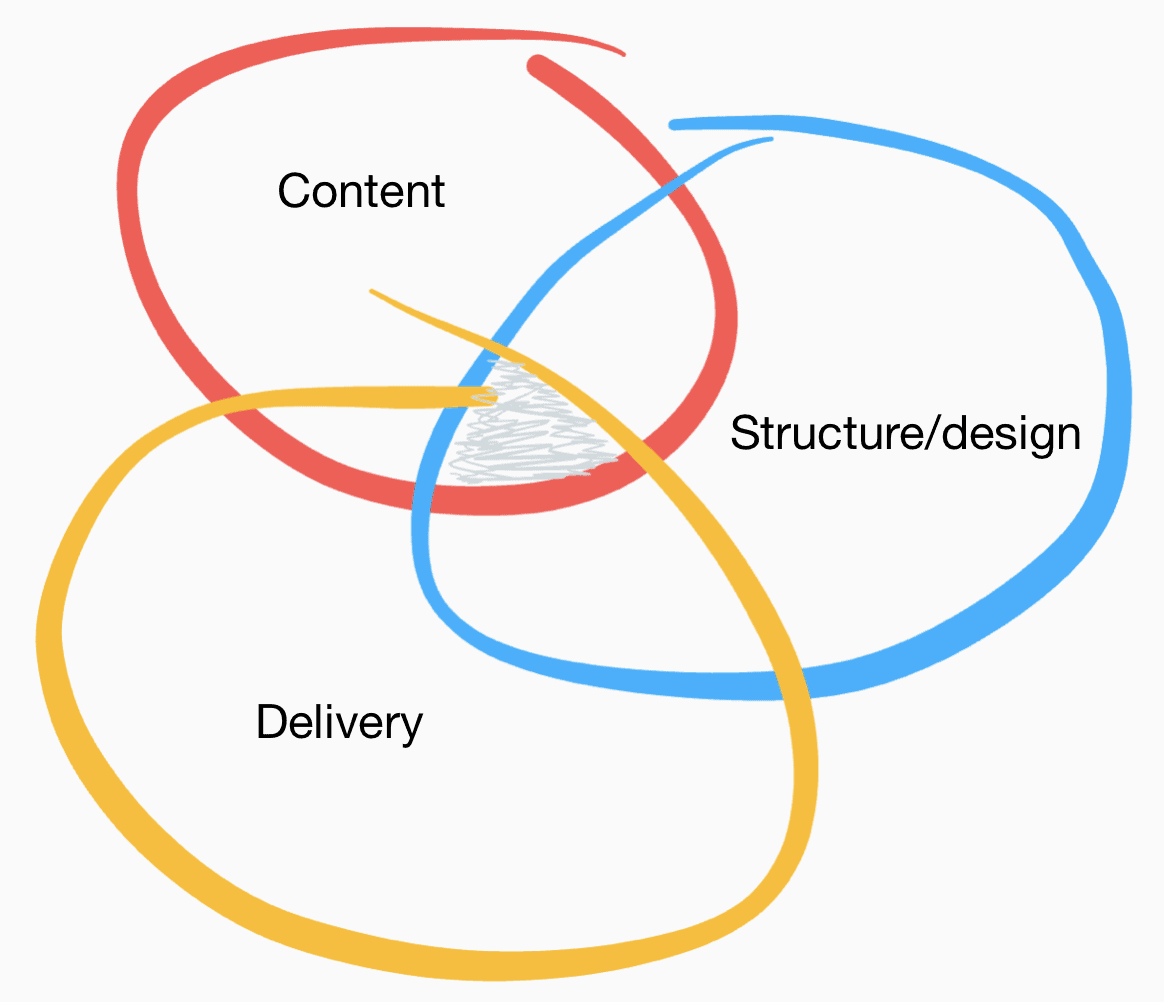
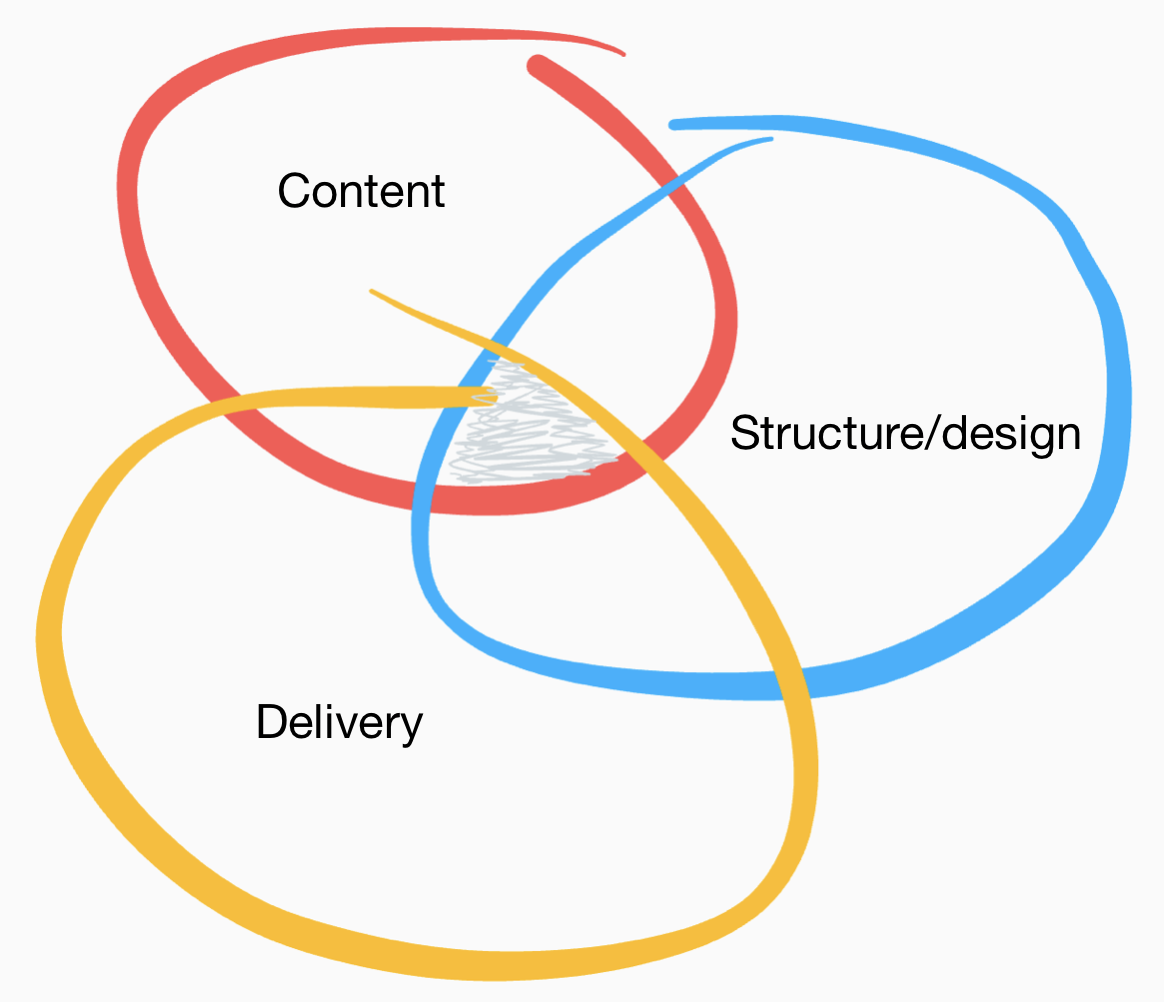
I’m often asked to help with how to deliver better presentations but the truth is that content and structure are the starting places, not delivery.
I mean, seriously! How hard can it be to properly think about how to structure a research presentation in something other than the traditional, boring, way?!?
So what’s the problem?
There are two big ones. Firstly, the “working” section is typically the longest part of the presentation and secondly no one cares about your working. Let’s take these separately.
Research presentation structure-problem part 1 — your How is too long
I get it, really I do. You’ve spent weeks or even months fighting with the problem. It’s important to you. Each and every detail is fascinating – or at least critical – because if it wasn’t, you’d not have dedicated a chunk of your life to it, right? Maybe it’s me but I find this particularly true of science-research-presentations more than business-research-presentation, but either way not only does the presenter believe everything here’s important (hint: it’s not) but it’s also fascinating to audiences (hint: possibly). This is because it contains the human element.

This is where you (Luke Skywalker) defeat the evil problem (Darth Vader). It’s full of conflict and energy and emotion.
Your lightsabers are probably more like late night’s in front of a computer but you get the idea.
As a result you spend a loooooong time on this part of the presentation but this is “how to structure a research presentation rookie error number one“.
This is fascinating as a film because that’s the point of the film – but it’s not why your audience is sitting in your presentation. I’ve got bad news for you… only you care about how many late nights you put in solving your presentation’s research problem.
Research presentation structure-problem part 2 — no one cares about this part of your presentation
This is just a fundamental about being a human being. Audiences aren’t there for you. Audiences want to know “what’s in it for me”… and that means that they only care about how you solved the problem if, and only if, they recognise the problem as important for them and if they’ve found your ‘What’ useful (or at least interesting).
That’s not to say you should give no information about your ‘How’ but remember that no one is actually there to hear about your ‘How’. They’re there for your ‘What’.
Don’t confuse audiences being interested with this sort of content in the moment with that same content being of interest in the longer term.
Okay Simon, so what’s the big secret about how to structure a research presentation, smartarse?
A research presentation, like most presentations, should start with “Why” just like normal.
Make it big, make it bold but don’t describe the problem (only). Describe the consequences of the problem.
- Sea levels aren’t just rising. Sea levels are rising which means that some people will lose their homes
- Covid19’s Delta variant isn’t just more transmissible. It’s more transmissible, which means that health services could get overwhelmed sooner
- Advertising costs aren’t just going up. Advertising costs are going up which means that you need to find more marketing budget or risk losing market share.
In short, give them a reason to care.
It’s not rocket-science – just ask your self “so what” and see if there’s a great answer in your presentation’s “Why”.
Cut your presentation’s “How” short
You can’t skip ‘how’ altogether, because people need enough information about ‘How’ to understand your ‘What’.
But that’s all they need. Everything else at this stage is
- at best un-necessary
- probably distracting
- at worst, self-indulgent – as you talk about your own struggles.
Deal with it and take the editor’s carving knife to your precious presentation. Don’t panic, you can circle back to your “How” at the end of your presentation if you need to.
Because (almost) no one cares about ‘How’ until the know ‘What’, your job as the presenter is to give your audience enough information to understand the ‘What’ … but only enough to do that, so that you don’t bore everyone. When they hear your “What”, some members of your audience will discover they don’t care about the ‘How’ at all.

Why not? Perhaps they’ve already got everything they need because they’ve discovered that what you’re presentation is about isn’t relevant to them. Great, you’ve saved everyone some time. Or perhaps they’re so trusting of you and your reputation that they are prepared to take you at face value.
Again, you’ve saved everyone some time. Cool!
How did I structure research presentations when I was a researcher?
Would an example help? Because I didn’t get it right then.

Back in the day I gave a very technical presentation about some research I was doing and I explained a lot of “how”. It was important to me so I subconsciously assumed it was important to my audience too. In fact I felt it was so important I almost did the whole thing in ‘real time’ and took as long to explain as it took to do the experiments!
What I should have done was say “We did a whopping great principle components analysis using 43 variables and over 120 thousand cases”. That would have given people enough – not to get into the weeds, but to understand the next section “… and what we found was…”.
When does your presentation’s How get covered then?
Remember, not everyone cares about your “How” and that’s fine. The people who will care, however, get an opportunity to explore it with you after your “What”. If you want a more detailed section, that’s fine, but personally I’ve always found that the best way to do this second batch of “How” is in one (or both) or two ways:
- in a detailed handout that you give people (or have them download) at the end of the presentation; or
- in the questions at the end.
Yes, I know, it might make you look a bit messy as a presenter, but looking cool isn’t your job. Helping your audience is your job. (See the three levels of presenting)
Questions aren’t something to be afraid of – not even in research presentations. People only ask questions if they care… and they’re only going to care about how you did something if they’re interested in the results you got (your “What”). Celebrate the questions!
In this animation below, the top WhyHowWhat is the traditional, wrong way, and the row at the bottom gives you the improved time line for your presentation.
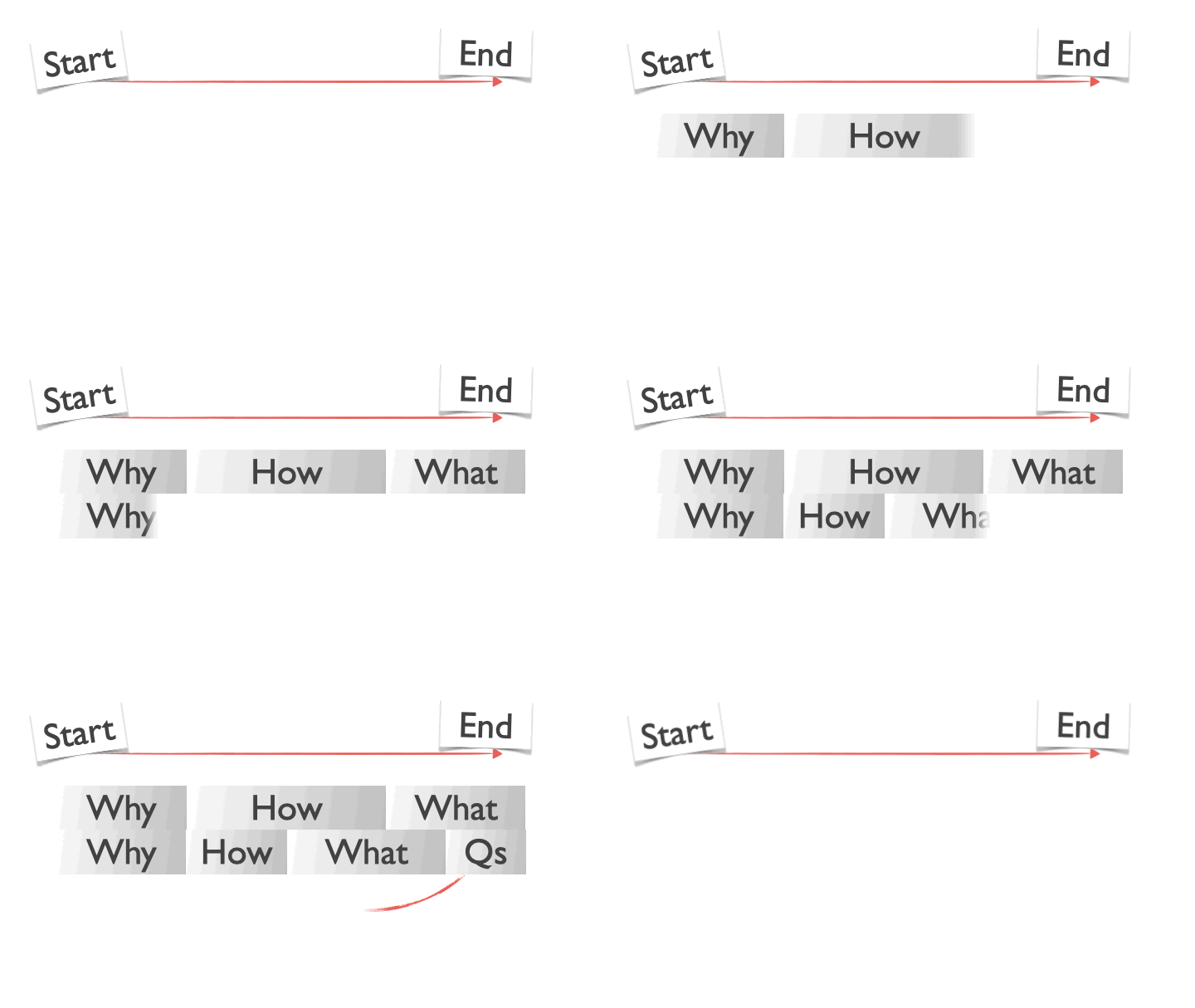
In the end it’s quite simple. Cut your “How” to the absolute minimum – it gives you more time for the “What”, which is what your audience care about anyway. If anyone’s interested enough in your “How” they’ll pick it up in the questions at the end of your presentation or you can give them the written report that goes with it
Ps: If you prefer, you can also watch me in the how to structure a research presentation video on youtube.
