
How to structure a presentation (particularly research/technical ones)
Presentations for research/technical stuff need a different approach to ‘sales’ or ‘self development’ presentations…
This blog a resource for presenters — not pro-speakers, but real people who need to make presentations as part of their 'day job'.
I have to be honest, this blog only gets updated every month or so. If you want a bit more, sign up for the (almost) weekly newsletter instead called "TalkTactics".
Presentations for research/technical stuff need a different approach to ‘sales’ or ‘self development’ presentations…
Yes, there really are two and you need them both for your business presentation to have much significant impact. They’re heavily related questions and I’m not even sure you can answer them individually… so pretty obviously I’m going to look at them separately 🙂 You might think of them as the same question asked in …
Read more “The two presentation “so what”s for a business presentation”
T-shaped learning curves are a pain. Let’s pretend you’re great at doing X, so you get promoted to be a Senior X-er. You still excel, so eventually you get promoted again – this time to Head of X. And that’s when the pain begins. So now you’re in charge you you’re not (just?) doing X, …

I’m a fan of the author Ursula Le Guin. What I didn’t know until recently was that she also did a lot of reviews. In her review of a book called “The mushroom at the end of the world” she observed that “Scientists and artists know that the way to handle an immense topic is …
Images can make your presentation rock. They can also bankrupt you. For example, the 500lb Silverback Gorilla of the image-being world is iStock and they start at £7/image for the absolute basics. For the (over-used) image of a woman looking out of a window while holding a coffee, it’s £20. Two of three of those …
Let’s start with something I tell you not to do in presentations – a long introduction I’m bordering on changing my position on AI. Until recently I’ve found its results pretty risible. If I ask it draw me a female high-jumper in action, for example, it gives her three legs. (On the other hand, more …

“I’m frightened about making presentations” or worse, “I get stage fright”. No you don’t. Well, okay, you /might/ get stage fright, but Stage Fright is a very specific thing. The term’s been bastardised and watered down by people who should know better doing fear-based-marketing. What far more people experience is a normal, healthy dose of …
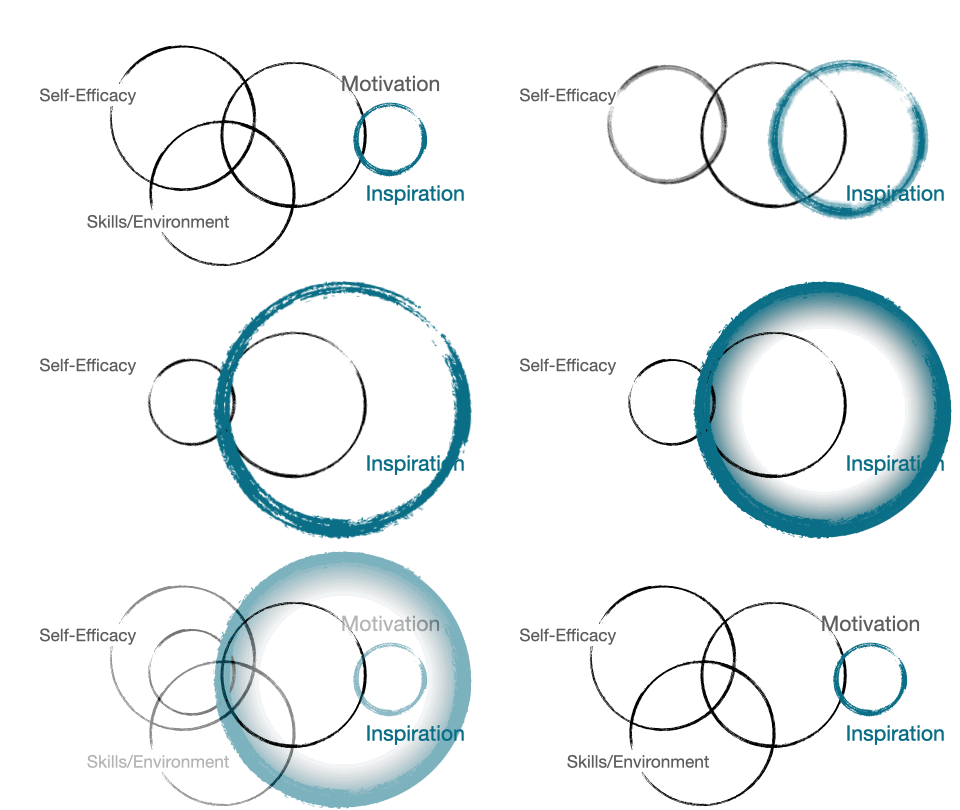
You know the ones. The rags-to-riches story. The against-all-the-odds story. The bad-to-worse-to-victory story. We’re told to use them because they’re inspirational. Whoops, that turns out to be a mistake. Why? Because… Because pretty much be definition such a story deals with exceptional people over coming staggering odds. And, again by definition that means these people …

We’re often told by experts (for which read “well-meaning friends who’ve read it somewhere online”) that we should start our presentations with a big bang to grab the audience’s attention. A powerful story is often cited as one of the best ways of doing this. Alternatives are a challenging, shocking fact or a provocative question. …
Leading a team or doing your own marketing? Awesome! But not having the impact on the world you think you should? Less Awesome.
StoryMaking is my new book that looks at how to tactically use stories in your presentations, your marketing and your sales. It's my usual light-weight style over heavy-weight research!
This will close in 30 seconds
The StoryMaking System is the result of reading (in mind-numbing detail) over 400 peer-reviewed research papers, dozens of books, thousands of ours of observational research and blood sweat and tears!
It's the framework for designing a presentation which gives you the fastest way to getting something is (almost) guaranteed to work. It gives your audience what they need - and only what they need - to be impacted.
The key elements are:
This will close in 20 seconds
